
What… the Menopause?
Each week we spotlight an unexpected and frustrating symptom of menopause that no one warned you about. Because menopause is more than just hot flashes and missed periods.
This week’s spotlight: Hot flashes without sweating
What is going on?
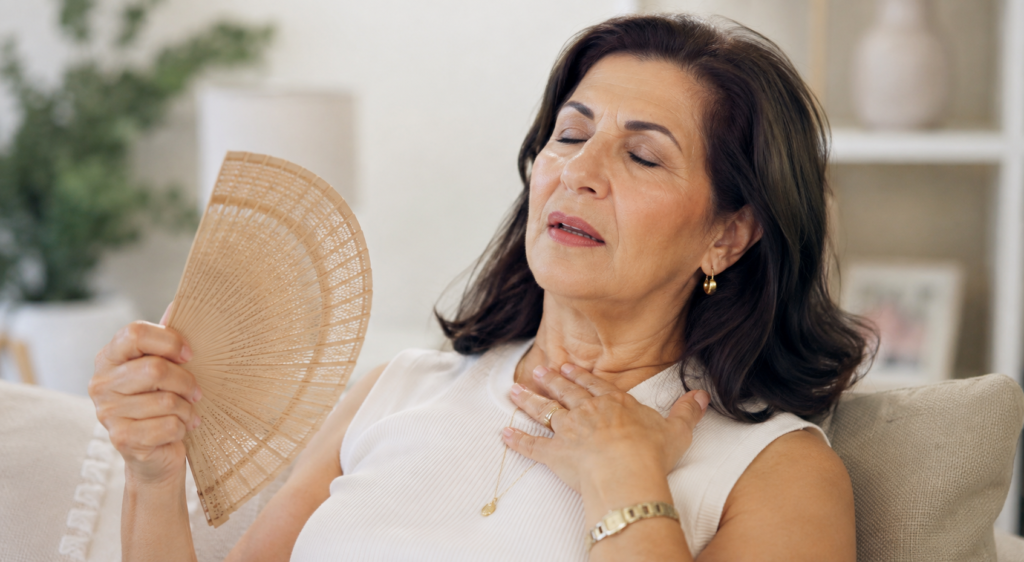
Yes, you can have a hot flash without sweating. A hot flash is a sudden sensation of heat, usually felt in the face, neck, chest, or upper body. Sweating can happen during a hot flash, but it doesn’t have to.
This is one of those menopause symptoms that make you think if this is really a hot flash or something else.
The medical term for hot flashes and night sweats is vasomotor symptoms, or VMS. They happen when changes in reproductive hormones during the menopause transition affect the brain’s temperature-regulation system, particularly an area called the hypothalamus.
Think of your hypothalamus as your body’s thermostat. During menopause, the range in which your body feels comfortable can become really narrow. A relatively small change in core temperature can then trigger the body’s cool down response.
That response can feel like a sudden rush of heat, flushing, a faster heartbeat, sweating and, sometimes, chills afterward.
Did you know that mild hot flashes may really only feel like a wave of heat without sweating one bit.
Sometimes it feels like your face is burning. Or your chest gets warm for no obvious reason. Or you’re sitting perfectly still in an air-conditioned room and then suddenly get really hot.
Then a few minutes later, it just passes. That can still be a hot flash.
And because there isn’t always a dramatic “I’m drenched in sweat!” moment, some women don’t recognize what they’re experiencing as a menopause symptom.
If you’re curious how to stop a hot flash with food, check out this Hack My Age conversation with Dr. Michael Greger: Eat This To Stop A Hot Flash: Nutrition Tips From The Author of How Not to Die
Hack My Age also features an episode specifically focused on “Top 3 Hot Flash Hacks That Are Most Effective” with Ellen Dolgen, so there is plenty more to explore if hot flashes are becoming your daily unwanted companion.
You’re not alone
Hot flashes are one of the most common symptoms of the menopause transition, and can affect up to 80% of women. They can begin during perimenopause and continue into postmenopause, although everyone’s experience is different.
Some women get a mild flush once in a while. Others have multiple episodes a day that interrupt work, exercise, sleep or just sitting through dinner without suddenly feeling like they’re on fire.
In a study of more than 600 peri- and postmenopausal women in Bangkok and Chiang Mai, Thailand, 65% reported hot flushes and/or night sweats.
This means that there isn’t one “correct” hot flash. You don’t have to be sweating through your clothes for your experience to be real. And you don’t have to have the stereotypical menopause symptom of suddenly needing to rip off your sweater.
Sometimes it’s just being hot.
The Menopause Society notes that mild hot flashes may be experienced as heat without sweating, while more severe episodes can involve enough heat and sweating to interrupt activity. Each episode commonly lasts around one to five minutes.
What can you do?
The best approach depends on how often your hot flashes happen, how disruptive they are, and whether you want hormonal or non-hormonal treatment.
If your hot flashes are occasional and mild, start by paying attention to patterns.
Notice when they happen.
Are they after you drink a glass of wine? A hot drink? Spicy food? Exercise? A fight with your boss? A warm bedroom? Or just completely out of nowhere?
Keeping a simple symptom log for a couple of weeks can help you identify triggers, although they really do vary considerably from woman to woman.
Hormone therapy (HRT) is the most effective treatment for bothersome menopausal hot flashes and night sweats for many women who are appropriate candidates. And for most women, the benefits of HRT outweigh the risks. Systemic (meaning whole body benefits) estrogen is available in forms including patches, pills, gels and sprays. Women who have a uterus absolutely need a progestogen alongside systemic estrogen to protect the uterine lining.
There are also non-hormonal prescription options. These include certain antidepressants, gabapentin and newer medications such as fezolinetant, which specifically targets a brain pathway involved in hot flashes. Keep in mind that certain medications accelerate bone loss, so make sure you have this discussion with your doctor.
If HRT is not an option, cooling yourself down quickly can also make an episode a little more comfortable. Dressing in layers, keeping your bedroom cool and having a cold drink or portable fan nearby are simple strategies.
Lifestyle habits matter too, although they aren’t a guaranteed cure. Regular exercise, a healthy diet, stress management and avoiding known personal triggers can all be part of a broader menopause strategy.
But if hot flashes are happening frequently or interfering with your sleep, work or quality of life, you don’t have to simply “put up with it.”
And this is where I would avoid falling into the “natural equals better” trap. Have the discussion about HRT with your health care provider.
There are plenty of supplements, herbs and menopause hacks marketed for hot flashes. Some have promising research, but evidence isn’t equally strong across the board, and supplements aren’t automatically safe just because they’re natural. Talk with a qualified healthcare professional before adding them, particularly if you’re taking other medications. One that I am particularly interested in is a phytoestrogen called s-equol, made from soybeans. Listen to this podcast episode to learn more about it.
What worked for me?
For me, hot flashes have been something to eliminate rather than tolerate, and I’ve taken a biohacking approach to figuring out what makes them better or worse.
That’s really the philosophy behind Hack My Age: don’t assume you have to suffer through a symptom just because someone tells you it’s “normal.”
Normal doesn’t mean you have to ignore it.
I’ve explored hot flashes from several angles, including lifestyle, nutrition, hormone therapy and non-hormonal approaches. And I’ve talked about these strategies extensively with experts on the Hack My Age podcast.
There isn’t one magic trick that works for every woman. That’s something I keep coming back to.
For some women, managing triggers and making small environmental changes is enough. Removing alcohol seems to be a big one for many of the women in my community. For others, the symptoms are significant enough to warrant medical treatment. And sometimes you need to combine several approaches.
I’ve also created a Hot Flash Masterclass specifically around this topic, because there are more ways to approach hot flashes than simply carrying a fan around and hoping for the best. Hack My Age currently offers the masterclass as a self-guided program focused specifically on hot flashes.
The bigger lesson?
Don’t dismiss what your body is telling you just because the symptom doesn’t look exactly like the textbook version.
If you’re suddenly experiencing unexplained waves of heat, especially alongside other changes of perimenopause or menopause, it’s worth paying attention.
Your body may be telling you something has changed.
And yes, sometimes menopause really is the answer.
FAQs: About Hot Flashes
Can hot flashes happen when you are not in menopause?
Yes. Hot flashes can have causes other than menopause, including certain medications and medical conditions such as thyroid disorders. If new or unexplained hot flashes don’t fit with your stage of life or come with other concerning symptoms, it’s worth discussing them with a healthcare professional.
Can anxiety cause a feeling of sudden heat?
Yes. Anxiety and stress can cause sensations such as warmth, flushing and sweating because they activate the body’s stress response. If you’re unsure whether you’re experiencing anxiety-related warmth or menopausal hot flashes, tracking when the episodes happen and discussing the pattern with your healthcare provider can help.
Why do I feel hot but have a normal temperature?
A hot flash is a sensation of heat, not necessarily a fever. During a vasomotor episode, the brain’s temperature-regulation system can trigger a cooling response even when your actual body temperature is not dangerously high.
When should I talk to a doctor about hot flashes?
Consider talking with a healthcare professional if hot flashes are new, frequent, worsening, disrupting your sleep or daily activities, or simply bothering you enough that you want treatment options. You don’t need to wait until symptoms become severe before asking for help.
Can hot flashes continue after menopause?
Yes. Hot flashes can continue after the final menstrual period, although they often become less frequent over time. Some women experience them for years, even decades after menopause.
Are hot flashes the same thing as night sweats?
Not exactly. Night sweats are hot flashes that happen during sleep. A person can experience nighttime hot flashes without necessarily waking up with completely soaked bedding. I personally have not experienced a daytime hot flash, but I have woken up at night hot and sweaty. For me, personally, the best solution was to start HRT.
Menopause has a funny way of reminding us that the symptoms don’t always follow the script.
Sometimes it’s a hot flash.
Sometimes it’s a hot flash without the sweat.
Either way, you’re not imagining it, and you are not alone.
Download the Menopause Symptom Tracker to help you figure it all out.
Zora Benhamou is a gerontologist who studies aging and is dedicated to challenging menopause stigma and ageist stereotypes. As the host of the Hack My Age podcast, she focuses on empowering women navigating the menopausal transition through evidence-based techniques that support your 80 year old self.