
What… the Menopause?
Each week we spotlight an unexpected and frustrating symptom of menopause that no one warned you about. Because menopause is more than just hot flashes and missed periods.
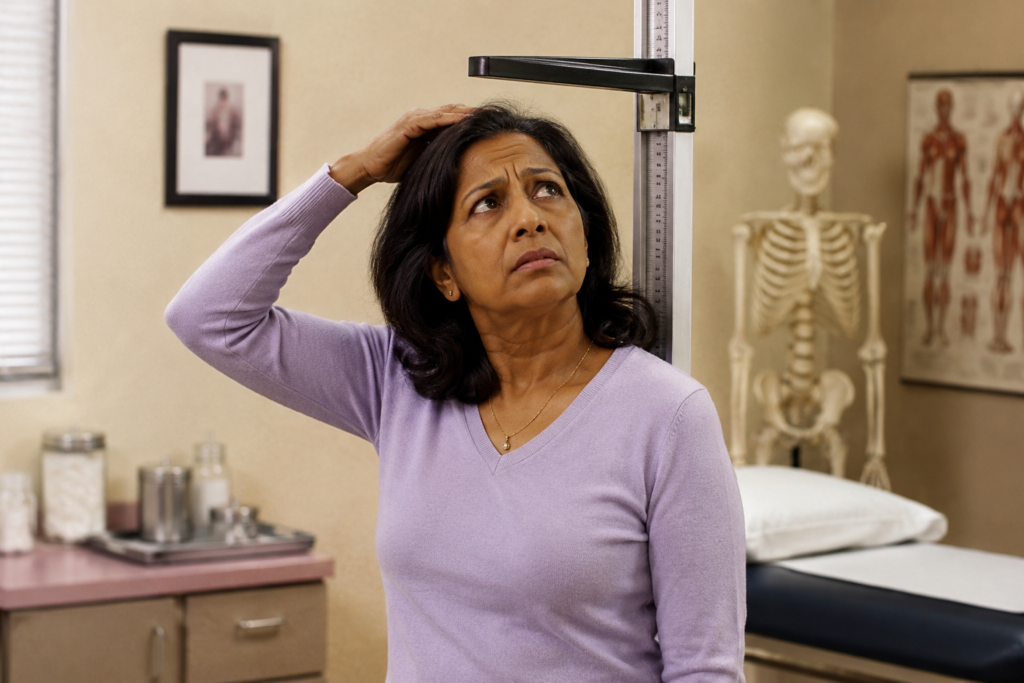
This week’s spotlight: Height Loss
You measure yourself one day and realize you’ve lost an inch. Your jeans seem longer. Your posture feels different. You blame aging, but what if your shrinking height is actually your bones asking for help?
Height loss is often one of the earliest visible signs that changes are happening deep inside your skeleton. And by the time you notice it, bone loss may have been occurring silently for years.
Why do women lose height during menopause?
Declining estrogen speeds up bone loss, making your bones weaker and your spine more vulnerable to tiny compression fractures that gradually reduce your height.
Bone is living tissue and throughout our life it continues to be broken down and rebuilt in a process called bone remodeling.
When we are in pre-menopause, estrogen helps keep this process balanced.
Then, when estrogen declines, bone breakdown starts to outpace bone building. Bone loss accelerates in the late perimenopause, begins even before the final menstrual period, and then continues into early postmenopause. Some women can lose as much as 20% of their bone density in the first several years around menopause, which dramatically increases the risk of osteopenia and osteoporosis, and ultimately risk of fracture.
The spine is particularly vulnerable.
The vertebrae can slowly compress over time, even without a dramatic injury. I am sure you have even witnessed this in some of the older women around you. We may not even feel these tiny compression fractures, but they can gradually shorten the spine, leaving us an inch or two shorter than we once were. And it’s not just vanity metrics.
Research shows that losing more than about 2 cm (¾ inch) may signal underlying vertebral fractures and a higher future fracture risk. It can also affect posture, balance, breathing and overall mobility.
Losing height during menopause is not just “getting older.” It may be an early warning sign that our bones deserve attention.
If you want to understand what a bone scan really means and how to build stronger bones after menopause, don’t miss this episode with Dr. John Neustadt:
How common is height loss after menopause?
Almost every woman has some degree of bone loss after menopause, but not everyone gets osteoporosis.
Worldwide, osteoporosis affects about one in three women over 50, making it one of the most common chronic conditions affecting older women.
Many women don’t discover they have osteoporosis until they break a wrist, hip or vertebra, and that’s why osteoporosis is often called a silent killer.
Unlike aching joints or hot flashes, weak bones usually don’t hurt until a fracture occurs.
Risk factors include:
- Early menopause
- Family history of osteoporosis
- Smoking
- Excessive alcohol consumption
- Low body weight
- Anorexia
- Long-term steroid use
- Physical inactivity
- Low protein or calcium intake
- Vitamin D deficiency
Even women who exercise and eat well aren’t automatically protected. Genetics, hormones, medications, gut health and muscle mass all influence bone health.
Bone loss is incredibly common after menopause, but fractures don’t have to be inevitable.
What can you do to protect your bones?
The best strategy is to build stronger bones before fractures happen.
Bone health isn’t about taking a supplement or eating more dairy. It’s about creating the right environment for bone remodeling.
1. Start with strength training. Resistance exercise is one of the few interventions shown to stimulate bone formation. Lifting progressively heavier weights places healthy stress on bones, encouraging them to become stronger.
Impact exercises also matter, so jumping, or carefully programmed impact exercises (when appropriate) help maintain bone density. But be cautious and seek guidance from a professional if you have osteoarthritis, pain or have limitations. You could make things worse.
2. Prioritize protein. Bones aren’t made from calcium alone. Approximately half of bone volume is protein, making adequate daily protein intake from whole foods is essential for healthy remodeling. Collagen is also an important component of bone, so bone broth or a quality collagen supplement may be considered.
3. Support your nutrients. Calcium, vitamin D, magnesium and vitamin K2 (MK4) all play important roles in bone metabolism, but supplementation should be personalized rather than taken blindly.
4. Consider hormone therapy. For many women, menopausal hormone therapy (MHT) can significantly reduce bone loss when started at the appropriate time. It is an important conversation to have with a menopause-trained healthcare provider.
5. Know your numbers. A DEXA scan measures bone mineral density, but it’s only part of the picture. Bone quality, muscle strength, balance and fall risk also influence fracture risk. Listen to this episode on what really does matter.
6. Improve and maintain balance. Many of us cannot lift one leg off the floor. If this is you, work with a professional or attend a yoga class to improve balance. About 95% of hip fractures are due to falls, so let’s work on not falling in the first place.
7. Finally, muscles protect your bones. Maintaining muscle mass improves balance, coordination and resilience, which reduces your chances of falling in the first place.
The earlier you invest in your bones, the greater your chances of staying strong, independent and fracture-free for decades to come.
What worked for me?
Bone health became deeply personal after I learned I had osteopenia despite living what many would consider a healthy lifestyle.
However, this all came on the tail of sever hip osteoarthritis. I was told not to lift heavy weights or do impact exercises. I was on baby dosages of HRT. And even though I was maintaining my protein, I was not taking any supplements particularly made for bones. Plus my stress and sleep were not optimal.
So it wasn’t a total surprise my DEXA showed bone loss.
Instead of obsessing over a single DEXA score, I began digging into the research, interviewing leading osteoporosis experts on the podcast, exploring newer technologies that assess bone quality, and taking a much more comprehensive approach that includes strength training, nutrition, recovery, hormones and lifestyle.
One of the most enlightening things was to learn about a REMS scan. This is an ultrasound based radiation free technology that looks at bone quality, not just density. It showed that actually, my bones were very strong, despite low bone density. Yes, this is possible.
After my hip surgeries, I got back to the weights and impact exercises, I optimized my hormone therapy, I got better sleep and the stress I had from chronic pain dissipated. All of this together has increased my bone quality and density and my DEXA scan one year later now shows normal bone density and I am in the green again.
FAQs: About Height Loss and Menopause
Can you regain height after menopause?
Once vertebrae have compressed, lost height is usually permanent. However, improving posture, building muscle and protecting bone health can help prevent further height loss.
At what age does bone loss speed up?
Bone loss begins gradually in our 20s (younger for girls), but accelerates during the menopause transition because estrogen levels decline rapidly.
Does walking build bone density?
Walking supports overall health, but it usually is not enough to offset the bone breakdown. Resistance training and impact exercises are generally more effective for increasing bone strength. And don’t forget to work on balance.
Should every woman get a DEXA scan?
I believe adult should get a DEXA or REMS. It is good to know your baseline and continue to screen once a year or as recommended by your doctor. Women with risk factors or early menopause will benefit from earlier testing.
Is osteoporosis inevitable after menopause?
No. Although bone loss is common, many women can significantly reduce their risk of osteoporosis and fractures through exercise, nutrition, hormone management, good sleep hygiene, stress management and early screening.
Download the Bone Force Guide to help you figure it all out.
Zora Benhamou is a gerontologist who studies aging and is dedicated to challenging menopause stigma and ageist stereotypes. As the host of the Hack My Age podcast, she focuses on empowering women navigating the menopausal transition through evidence-based techniques that support your 80 year old self.