
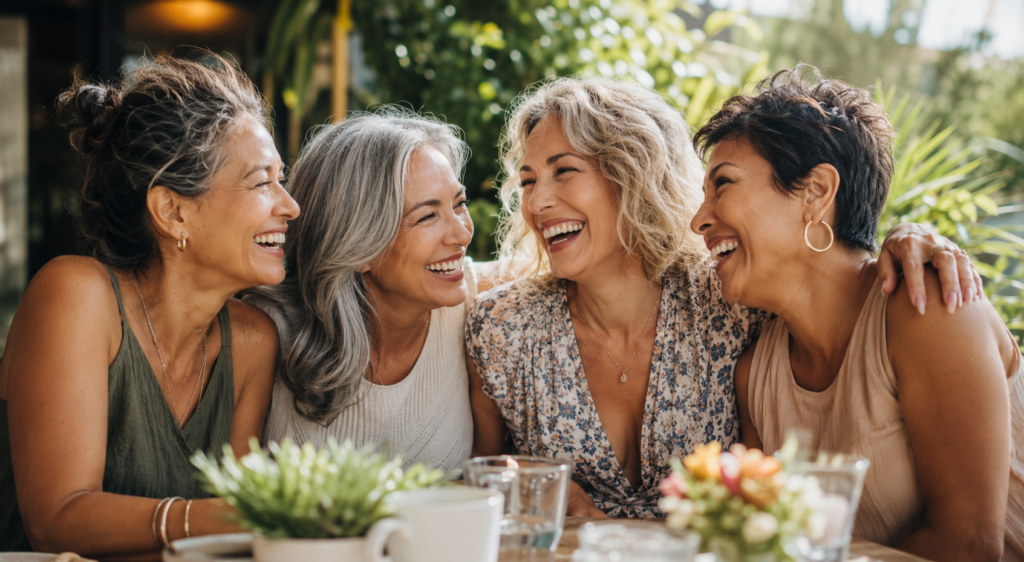
Can Friendship Really Improve Your Health as You Age?
What if one of the most powerful things you could do for your health didn’t come in a supplement bottle or require a gym membership?
What if it was simply spending more time with the people who make you laugh, listen without judgment, and show up when life gets hard?
We often think of friendship as something that makes life more enjoyable. But growing research suggests it may also make life healthier. I often talk about the famous Harvard Study of Adult Development which has been going on for over 80 years, but this one is is new and supports their findings.
A fascinating study called “United We Thrive: Friendship and Subsequent Physical, Behavioural, and Psychosocial Health in Older Adults: An Outcome-Wide Longitudinal Approach” looked at whether friendships influence much more than happiness. Researchers wanted to know if close friendships could predict better physical health, healthier behaviors, and emotional well-being years later.
The findings suggest that they can. Woo hoo!
While friendship isn’t a replacement for exercise, nutritious food, or good medical care, it may be one of the most overlooked pillars of healthy aging. I call it the 5th vital sign. We have heart rate, respiration rate, blood pressure, temperature and now relationship status.
What’s This About?
Friendship isn’t just having people around you. It refers to meaningful relationships with people you choose, those who offer companionship, emotional support, trust, and a sense of belonging. There is a big difference between isolation and loneliness. You can be isolated, like during Covid, but not feel lonely at all. But you can also be in a house full of people and still feel lonely. It’s the loneliness aspect that kills.
Researchers have known for decades that social isolation is associated with poorer health outcomes. But this study asked a different question: can having good friendships actually help people thrive as they get older?
Instead of looking at just one health outcome, the researchers examined dozens of them all at once. They wanted to see whether friendship predicted changes across nearly every area of life, from physical health and emotional well-being to lifestyle habits and psychological resilience.
This broader approach gives us a much richer picture of how social relationships may influence healthy aging.
Friendship isn’t simply about avoiding loneliness. It may shape how well we function physically, emotionally, socially, and psychologically as we age.
When and Who?
The study analyzed data from the Health and Retirement Study (HRS), an ongoing national research project that follows adults over the age of 50.
Participants completed detailed surveys about many aspects of their lives, including:
- their friendships
- physical health
- mental health
- lifestyle habits
- emotional well-being
- life satisfaction
- sense of purpose
Researchers measured participants’ friendships first, then examined their health approximately four years later.
Because the study followed people over time rather than taking a single snapshot, it gives us stronger evidence about how friendship may influence future health.
However, it’s important to remember that this is still an observational study. That means researchers found associations, not proof that friendship directly caused better health.
What Did the Researchers Find?
People with stronger friendships generally experienced better health and well-being years later.
Perhaps the most surprising finding wasn’t one dramatic health benefit, it was how many different areas of life friendships appeared to touch.
1. Better emotional well-being. Participants with stronger friendships reported:
- greater happiness
- higher life satisfaction
- more optimism
- stronger sense of purpose
- greater positive emotions
Just as importantly, they were less likely to experience:
- depressive symptoms
- loneliness
- hopelessness
- psychological distress
These emotional benefits matter because chronic stress and depression are themselves linked to poorer physical health over time.
2. Healthier lifestyle habits. The study also found that people with stronger friendships were more likely to engage in healthier behaviors.
These included habits that support long-term health, such as maintaining healthy routines and staying socially engaged.
This makes sense when you think about it.
Friends often encourage healthy behaviors without us even realizing it. They invite us for walks instead of staying home. They motivate us to join fitness classes, cook healthier meals, or simply get out of the house.
Healthy habits are often contagious.
Of course, you can be surrounded by “friends” who have risky behaviors, like smoking, alcohol or drug abuse. And this may have a negative impact on your health. That’s why I always talk about choosing your friends wisely.
3. Better psychological health. One of the strongest findings involved psychological well-being.
People with richer friendships tended to report:
- greater resilience
- higher self-esteem
- stronger feelings of mastery over life
- more purpose
- greater personal growth
These aren’t just “nice-to-have” qualities.
Research consistently shows that purpose, resilience, and optimism are linked with healthier aging, improved cognitive function, and even lower mortality risk.
4. Some physical health benefits. The researchers also observed associations between friendship and several physical health outcomes.
While the strongest effects were seen in emotional and psychological health, friendships were also linked with improvements in certain aspects of physical well-being.
One reason may be that supportive friendships reduce chronic stress.
When we feel supported, our stress response tends to become less intense. Over years and decades, lower chronic stress may contribute to healthier aging throughout the body.
Why Does This Matter?
Friendship influences both your biology and your daily habits.
Scientists believe several mechanisms may explain these findings.
First, supportive relationships can help regulate the body’s stress response. Chronic stress keeps stress hormones elevated, contributing to inflammation, poorer sleep, cardiovascular disease, and impaired immune function.
Good friendships may help buffer that stress. Second, friends influence behavior.
People with supportive social circles often:
- move more
- laugh more
- stay mentally active
- recover faster from setbacks
- seek medical care when needed
- maintain healthier routines
Finally, friendships give us something that becomes increasingly important as we age: a sense of belonging.
Humans evolved as social creatures. Feeling connected isn’t simply emotionally comforting, but it appears to be biologically beneficial.
Why Does This Matter During Menopause and Beyond?
Midlife is often when women need friendship the most, and unfortunately, when many friendships become harder to maintain.
Between careers, caregiving, aging parents, changing hormones, children leaving home, divorce, or retirement, many women notice their social circles shrinking.
At the same time, menopause can bring mood changes, anxiety, sleep disruption, brain fog, and shifts in confidence.
These changes can make it tempting to withdraw socially.
But this study suggests that maintaining meaningful friendships isn’t a luxury.
It may actually be an investment in your future health.
When we prioritize connection, we’re not only nurturing our emotional lives, we may also be supporting our long-term resilience, well-being, and healthy aging.
Friendship won’t replace exercise, strength training, sleep, or good nutrition.
But just like those habits, it deserves a regular place in your longevity toolkit.
What Am I Doing About It?
If you’ve listened to the Hack My Age podcast for a while, you’ll know I often talk about the pillars of healthy aging: strength training, sleep, nutrition, hormones, brain health, and movement.
But there’s another pillar that deserves just as much attention: social health.
Social health refers to the quality of our relationships and our ability to connect meaningfully with others. It’s increasingly being recognized as an important part of healthy aging because our relationships influence how we think, feel, and even how well we care for ourselves.
Longevity isn’t just about adding years to your life. It’s about adding life to your years.
That’s one reason I encourage women to build communities where they feel seen, heard, and supported. Whether it’s joining a walking group, attending a fitness class, volunteering, reconnecting with an old friend, or simply making time for regular conversations, these moments of connection matter.
We spend so much time optimizing our supplements, exercise routines, and meal plans. Yet many of us overlook one of the most accessible health tools we already have: each other.
Healthy aging isn’t something we do alone.
Practical Tips: How Can You Strengthen Your Friendships?
Small, consistent efforts often make the biggest difference.
You don’t need dozens of close friends to experience the benefits of social connection. Even one or two meaningful relationships can make a positive impact.
Here are a few simple ways to nurture your friendships:
Schedule friendship like you schedule exercise. We rarely skip an important doctor’s appointment, yet it’s easy to postpone catching up with friends. Try putting regular coffee dates, walks, or video calls on your calendar. Treat them as part of your wellness routine.
Combine movement with connection. Instead of meeting over dinner every time, invite a friend to:
- go for a walk
- take a Pilates or yoga class
- join a hiking group
- lift weights together
- explore a local market
You’ll strengthen both your body and your relationship.
Reach out before you “have time.” Many friendships slowly fade because everyone is waiting for life to become less busy. Instead of waiting for the perfect moment, send the text today. Sometimes maintaining a friendship starts with a simple: “I’ve been thinking about you.”
Be willing to go first. Making new friends as an adult can feel uncomfortable, but someone has to make the first move. Invite someone for coffee, ask a colleague to join you for lunch, join a local class, attend community events related to your interests. Most people are looking for connection too.
Focus on quality over quantity. The study wasn’t about collecting hundreds of acquaintances. Meaningful friendships are built on:
- trust
- shared experiences
- emotional support
- mutual respect
- consistency
One close friend may offer more health benefits than dozens of casual social media connections.
Don’t forget to receive support. Many women are excellent caregivers but struggle to ask for help. Healthy friendships go both ways. Allow people to check in on you, accept invitations, and share what’s really going on. Connection deepens when vulnerability goes both directions.
This study sends a powerful message: healthy aging isn’t only about what you eat, how much you exercise, or which supplements you take. It’s also about who walks beside you.
This study reminds us that meaningful friendships are closely linked with better emotional well-being, healthier behaviors, and greater resilience as we age.
While scientists continue to study exactly how these relationships influence our health, one message is already clear: the people we choose to share our lives with may be one of the most powerful investments we can make in our future well-being.
FAQ: Friendship & Longevity
Can making new friends later in life still improve your health?
Yes. Research suggests that meaningful social relationships remain important throughout adulthood. It’s never too late to build supportive friendships that contribute to emotional well-being and healthier aging.
How many close friends do you need for better health?
There isn’t a magic number. The quality of your relationships appears to matter more than the size of your social circle. A few trusted friends can provide significant emotional support.
Can online friendships provide the same benefits?
Digital friendships can reduce loneliness and help people stay connected, especially when distance is a barrier. However, many researchers believe that combining online communication with face-to-face interaction offers the greatest benefits whenever possible.
Why do friendships become harder to maintain after age 50?
Life transitions such as retirement, caregiving, menopause, health changes, relocation, and children leaving home can all affect social networks. Maintaining friendships often requires more intentional effort during this stage of life.
Is loneliness the same as being alone?
No. You can spend time alone without feeling lonely, and you can feel lonely even when surrounded by people. Loneliness is the feeling that your social needs are not being met, while solitude can be a healthy and restorative choice.
Can strong friendships reduce stress?
Supportive friendships may help people cope with stressful situations by providing emotional encouragement, practical help, and a sense of belonging. Lower stress over time is associated with better overall health.
Zora Benhamou is a gerontologist who studies aging and is dedicated to challenging menopause stigma and ageist stereotypes. As the host of the Hack My Age podcast, she focuses on empowering women navigating the menopausal transition through evidence-based techniques that support your 80 year old self.
Reference: Kim, E. S., Chopik, W. J., Chen, Y., Wilkinson, R., & VanderWeele, T. J. (2023). United we thrive: friendship and subsequent physical, behavioural and psychosocial health in older adults (an outcome-wide longitudinal approach). Epidemiology and Psychiatric Sciences, 32, e65. Cambridge University Press.