
What… the Menopause?
Each other week we spotlight an unexpected and frustrating symptom of menopause that no one warned you about. Because menopause is more than just hot flashes and missed periods.
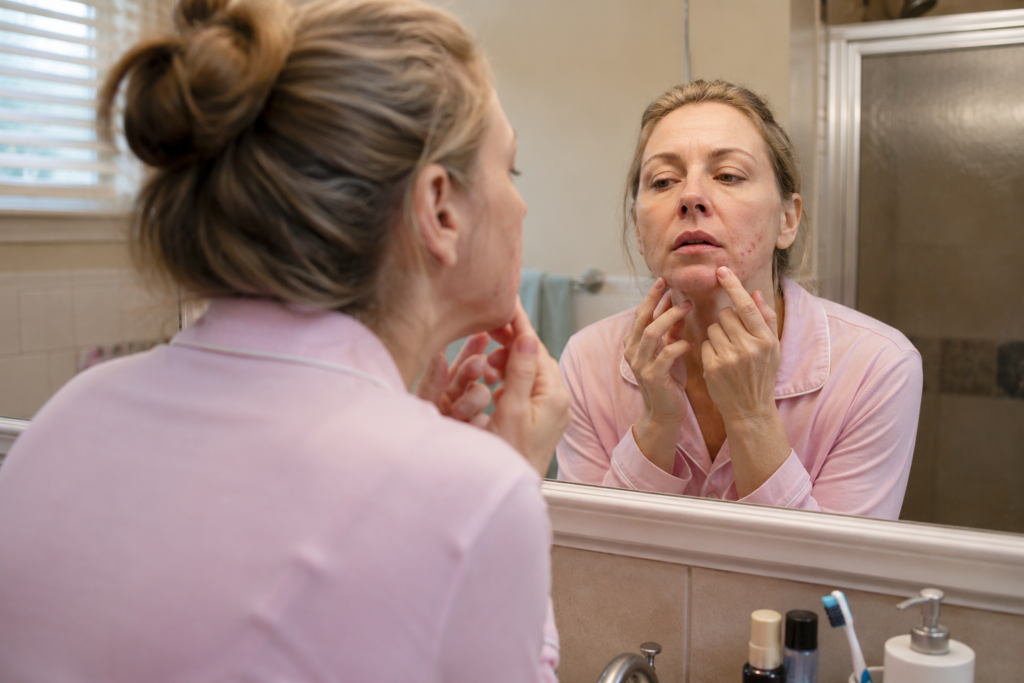
This week’s spotlight: Adult Acne
Just when you thought you left breakouts behind in high school, menopause has other plans.
One day you’re dealing with dry skin and fine lines, and the next you’re staring at painful pimples along your jawline, chin, and neck. It feels unfair, especially when you’re simultaneously navigating wrinkles, thinning skin, and changing hormones.
If you’re wondering why you’re suddenly breaking out in your 40s, 50s, or beyond, you’re not imagining it. Adult acne is a common but rarely discussed symptom of the menopause transition.
What’s Going On? Why Does Menopause Cause Adult Acne?
Adult acne during menopause is primarily caused by hormonal fluctuations that alter oil production, inflammation, and skin function.
During perimenopause and menopause, estrogen levels decline while androgens (male hormones like testosterone) may become relatively more dominant. Even if testosterone levels don’t increase, the drop in estrogen can create an imbalance that stimulates the skin’s oil glands.
This can lead to:
- Increased sebum (oil) production
- Clogged pores
- Inflammation
- Hormonal breakouts, especially around the jawline and chin
Why does it happen during menopause?
Several factors can contribute:
Declining Estrogen. Estrogen helps regulate oil production and supports healthy skin function. As levels decline, the skin may become more prone to inflammation and breakouts.
Relative Androgen Dominance. When estrogen drops faster than testosterone, androgens can have a stronger effect on the skin, stimulating excess oil production. More so if you’re taking a little too much testosterone as part of your menopause therapy.
Increased Stress. Midlife often comes with caregiving responsibilities, career pressures, relationship changes, and disrupted sleep. Chronic stress elevates cortisol, which may worsen inflammation and acne.
Insulin Resistance. Changes in metabolism during menopause can affect blood sugar regulation. Elevated insulin levels may stimulate androgen activity, potentially contributing to breakouts.
If you’re interested in why your skincare products may have stopped delivering the same results and want to learn about the science behind regenerative skincare, start here.
This episode explores what causes skin cells to become less responsive over time, how exosomes act as cellular messengers, why peptides may work better when paired with exosomes, and how to evaluate regenerative skincare products while avoiding common red flags.
You’re Not Alone: How Common Is Adult Acne During Menopause?
Adult acne affects a significant number of women during perimenopause and menopause.
Research suggests that adult female acne can persist well into midlife, with hormonal changes being a major contributing factor. Many women report new or worsening breakouts during the menopausal transition.
In my own menopause community Biohacking Menopause, we often talk about sudden jawline acne, cystic breakouts, and changing skin texture are incredibly common. Many women are surprised to discover that menopause, not puberty, is responsible for their most stubborn acne.
The frustrating part?
You may be dealing with both acne and aging skin simultaneously.
That’s why traditional acne advice often falls short. Menopausal skin has unique needs that require a different approach.
If you’re experiencing breakouts in midlife, you’re far from alone. Adult acne is a recognized symptom of hormonal change and one that many women silently struggle with.
What Can You Do About Menopause Acne?
The most effective approach combines hormone support, blood sugar balance, stress management, and a targeted skincare routine.
1. Support Hormonal Balance. Work with a qualified healthcare practitioner to evaluate whether hormonal shifts may be contributing to your symptoms. Depending on your individual situation, options may include:
- Menopause Hormone Therapy (MHT/HRT)
- Addressing insulin resistance
- Evaluating androgen levels
- Optimizing sleep and recovery
2. Stabilize Blood Sugar. Blood sugar spikes can contribute to inflammation and hormonal imbalance. Focus on:
- Protein-rich meals
- Fiber-rich vegetables
- Healthy fats
- Minimizing highly processed foods and excess sugar
- Walk 10 minutes after meals
- Build muscle
3. Reduce Chronic Stress. Stress can amplify hormonal acne through increased cortisol production. Helpful strategies include:
- Walking outdoors
- Breathwork
- Meditation
- Strength training
- Prioritizing sleep
4. Upgrade Your Skincare. Menopausal skin often needs a gentler approach. Look for ingredients such as:
- Retinoids or retinol
- Salicylic acid
- Azelaic acid
- Niacinamide
- Ceramides for barrier support
Avoid over-cleansing or harsh treatments that can damage an already vulnerable skin barrier.
5. Don’t Ignore Gut Health. Emerging research continues to explore the relationship between gut health, inflammation, hormones, and skin quality. A nutrient-dense diet that supports gut health may help improve overall skin resilience.
There is no single cure for menopause acne. The most effective solutions address both internal hormonal changes and external skincare habits.
What Worked For Me?
One thing I’ve learned after years of studying aging and interviewing experts on the Hack My Age podcast is that symptoms rarely exist in isolation.
When skin changes show up in menopause, I don’t view them as simply a skincare problem. I see them as information.
For me, the biggest improvements in overall skin health have come from focusing on the foundations:
- Prioritizing sleep
- Managing stress
- Eating enough protein
- Supporting blood sugar balance
- Strength training consistently
- Working with – not against – my changing hormones
- Having a simple but effective skincare routine with high quality products
The temptation is to search for a miracle cream, but in my experience, healthy skin is often a reflection of what’s happening beneath the surface.
Your skin is talking to you. The question is: are you listening?
FAQs: About Acne and Menopause
Does menopause acne look different from teenage acne?
Yes. Menopause acne is often deeper, more inflammatory, and concentrated around the jawline, chin, and neck rather than the forehead and T-zone.
Can menopause acne occur even if I never had acne before?
Absolutely. Some women experience their first significant breakouts during perimenopause or menopause due to changing hormone levels.
Can hormone replacement therapy make acne worse?
For some women, hormone therapy may temporarily affect the skin as the body adjusts, particularly if you’re introducing testosterone. For others, balancing hormones may improve acne symptoms. Individual responses vary. If acne is a result from your testosterone therapy, it’s time to lower it.
How long does menopause acne last?
It varies widely. Some women experience temporary flare-ups during perimenopause, while others notice acne continuing into postmenopause.
Should I see a dermatologist for menopause acne?
Yes. A dermatologist can help identify whether your breakouts are hormonal and recommend appropriate treatment options that work with aging skin.
Is dry skin and acne at the same time normal during menopause?
Yes. Menopause can reduce skin hydration while simultaneously increasing hormonal breakouts, creating the frustrating combination of acne and dryness.
Download the Menopause Symptom Tracker to help you figure it all out.
Zora Benhamou is a gerontologist who studies aging and is dedicated to challenging menopause stigma and ageist stereotypes. As the host of the Hack My Age podcast, she focuses on empowering women navigating the menopausal transition through evidence-based techniques that support your 80 year old self.