
What… the Menopause?
Each week we spotlight an unexpected and frustrating symptom of menopause that no one warned you about. Because menopause is more than just hot flashes and missed periods.
This week’s spotlight: Facial Hair Growth
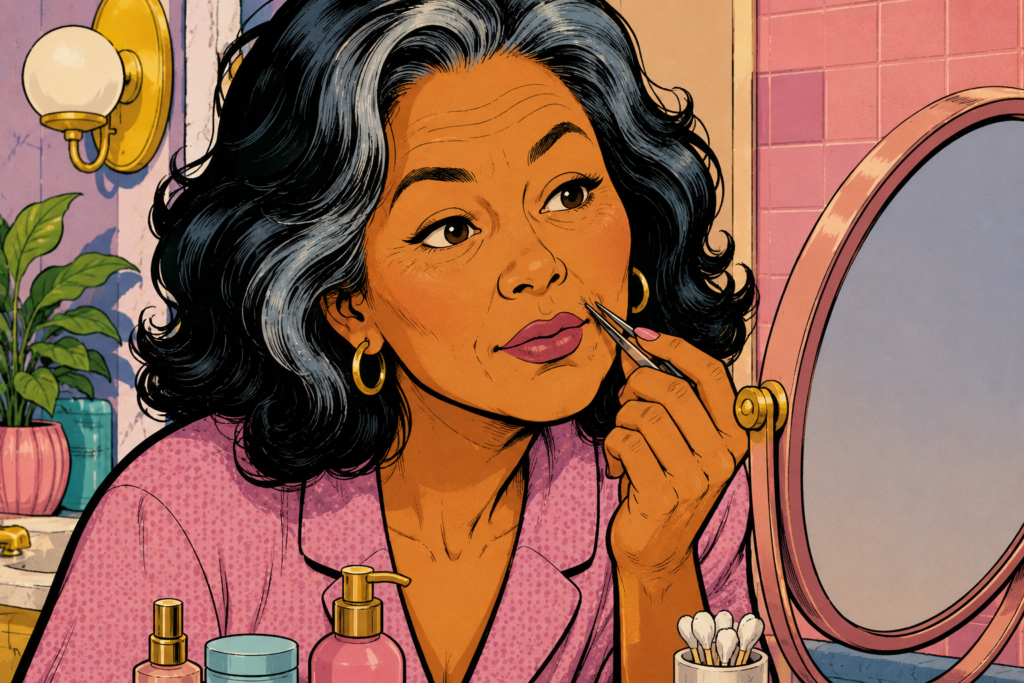
You lean into the mirror one morning and there it is.
A dark chin hair.
Then another.
Maybe a few around your upper lip or jawline.
No one warned you that while the hair on your head might start thinning, hair can suddenly decide to grow where you never wanted it. It’s frustrating, confusing, and surprisingly common.
The good news? It’s usually a normal part of menopause, and there are ways to manage it.
What’s going on? Why does menopause cause facial hair growth?
During menopause, estrogen levels fall faster than androgen (male hormone) levels. This creates a relative increase in androgen activity, which can stimulate hair follicles on the face.
Facial hair growth is a form of hirsutism, which is the growth of coarse, darker hair in areas where women don’t typically grow much hair, such as the chin, upper lip, jawline, or neck.
Contrary to popular belief, your body isn’t suddenly making huge amounts of testosterone. Instead, estrogen declines dramatically, while testosterone declines more gradually. That shift changes the hormone balance.
Hair follicles are incredibly hormone-sensitive. As estrogen decreases:
- facial hair follicles become more active
- hair on the scalp may become thinner
- existing fine facial hairs can become darker and coarser
- new hairs may begin appearing after years of having none
Genetics also play a major role. If your mother or grandmother developed chin hairs after menopause, there’s a good chance you may too. Go and ask them if they’re around!
Facial hair growth during menopause is usually caused by changing hormone ratios, not by suddenly having too much testosterone.
You’re not alone: How common is facial hair during menopause?
Many women notice new facial hair sometime during perimenopause or after menopause, although the amount varies widely.
Research suggests mild facial hair becomes increasingly common after menopause as estrogen declines and hair follicles become more responsive to androgens. For some women it’s a couple of stray chin hairs. For others it can become thicker or require regular hair removal.
Certain factors make it more likely:
- genetics
- naturally higher androgen sensitivity
- conditions like PCOS earlier in life
- some medications
- increasing age
If facial hair appears very suddenly, becomes excessive, or is accompanied by symptoms such as deepening voice, rapid muscle gain, or menstrual changes before menopause, it’s worth discussing with your healthcare provider to rule out other medical causes.
A few chin hairs are normal during menopause. Rapid or dramatic hair growth deserves medical evaluation.
What can you do about menopause facial hair?
You can’t completely stop hormonal changes, but you can reduce their impact and safely remove unwanted hair.
1. Choose the right hair removal method. Depending on how much hair you have, options include:
- Tweezing (great for occasional hairs)
- Threading
- Waxing
- Dermaplaning
- Facial epilators
- Shaving (yes, it’s perfectly safe and it won’t make hair grow back thicker)
- Laser hair removal (works best on darker hair)
- Electrolysis (the only FDA-recognized permanent hair removal method)
The best choice depends on your skin tone, hair colour, budget, and how permanent you want the results to be.
2. Support healthy hormone balance. Lifestyle won’t eliminate facial hair, but it can support overall hormonal health. Focus on:
- strength training
- maintaining a healthy body composition
- adequate protein intake
- managing insulin resistance if present
- quality sleep
- stress management
- HRT – get your hormones optimized – likely need to add estradiol and progesterone to balance out the testosterone
These habits support metabolic health, which influences hormone balance throughout menopause.
3. Review your medications and supplements. Some medications can influence hair growth.
If facial hair appears suddenly after starting a new medication, speak with your healthcare provider before making any changes.
4. Talk to your doctor if hair growth becomes significant. If facial hair is severe or distressing, medical treatments may help. Depending on your health history, options may include:
- hormone therapy
- prescription anti-androgen medications
- topical prescription creams that slow facial hair growth
Treatment should always be individualized with your healthcare provider.
There isn’t one “best” solution. Most women benefit from combining cosmetic hair removal with strategies that support healthy aging and hormone health.
What worked for me?
One thing I’ve learned after interviewing hundreds of menopause experts is that there isn’t a single magic solution for every symptom.
Facial hair hasn’t been one of my biggest menopause struggles, but I have 2 or 3 hairs that have made their appearance when I turned 45. Honestly, why do hairs appear where we don’t want them, but disappear (like from our eyebrows or head) where we actually want them?!
My philosophy has always been to focus on what moves the needle most: supporting your overall health first. That means eating enough protein, building muscle, managing stress, optimizing sleep, and making informed decisions about hormone therapy if it’s right for you.
When it comes to cosmetic concerns like facial hair, I don’t believe women should feel guilty for choosing whatever makes them feel confident, whether that’s tweezing, laser treatments, HRT or simply embracing the changes.
Menopause isn’t about chasing perfection. It’s about understanding what’s happening in your body so you can make empowered choices.
FAQs: About Facial Hair and Menopause
Does menopause facial hair ever go away?
Not usually on its own. Once a hair follicle has been activated by hormonal changes, it often continues producing hair. However, treatments like laser hair removal or electrolysis can significantly reduce or permanently remove unwanted hair.
Can certain foods reduce facial hair?
No food has been proven to directly reduce facial hair growth. However, a balanced diet that supports metabolic health and healthy insulin levels may help support overall hormone function.
Is laser hair removal safe after menopause?
For most women, yes. Laser hair removal is considered safe when performed by a qualified professional. It tends to work best on dark hair against lighter skin, while electrolysis may be a better option for lighter or gray hairs.
Why do some menopause facial hairs seem thicker than others?
Facial hair varies because different hair follicles respond differently to hormones. Some follicles produce fine, light “vellus” hairs, while others transition to thicker, darker terminal hairs.
Can stress make menopause facial hair worse?
Stress doesn’t directly cause facial hair growth, but chronic stress can influence hormone regulation, which may indirectly affect hair growth patterns in susceptible individuals. Managing stress supports overall hormonal health.
Download the Menopause Symptom Tracker to help you figure it all out.
Zora Benhamou is a gerontologist who studies aging and is dedicated to challenging menopause stigma and ageist stereotypes. As the host of the Hack My Age podcast, she focuses on empowering women navigating the menopausal transition through evidence-based techniques that support your 80 year old self.